
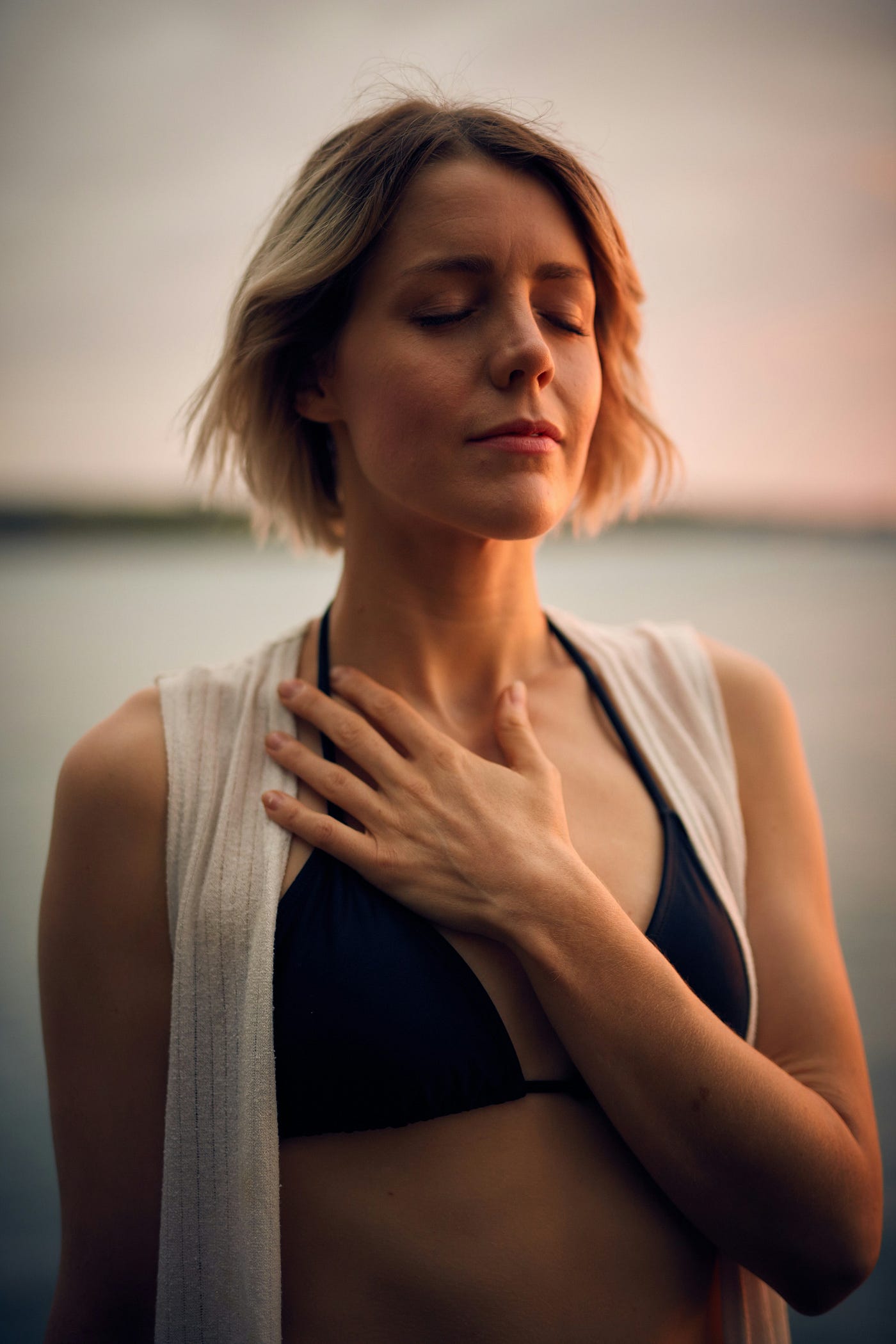
Photo by Darius Bashar on Unsplash
Relationship between anxiety, meditation and autogenic training
Many meditation guides will tell you that focusing on your breath is the key to meditation, to calm the body and quiet the mind, (and rightfully so for many) but after years of trying and retrying, session after session, this approach never resonated with me.
Meditation isn’t as easy as it sounds. It requires time, discipline, and discovering your own unique “style” of meditation. There’s a path to inner peace for all of us, and it might look different than expected. If traditional meditation hasn’t clicked for you yet, don’t be discouraged. What works for one person might not work for another.
After years of experimenting, I discovered a surprising truth: focusing on the breath, often considered the cornerstone of meditation, became instead the biggest obstacle in my own journey.
I noticed that during meditation, especially in group settings, the instructions to take slow, deep inhales and exhales felt like a performance I couldn’t deliver.
Paradoxically, instead of calming my body, my muscles would tighten, and the effort to breathe deeply became an unnatural, frustrating struggle.This was the opposite of what meditation intended. Instead of relaxing, I found myself growing with more stress.
Having a tendency towards anxiety, I’m particularly aware of how anxiety or stress can disrupt natural breathing patterns. When experiencing anxiety you might find yourself sighing more frequently, a subtle sign of underlying tension. Anxiety, after all, starts in the brain but has a way of creeping into your body.
Even in calm moments, I noticed that my breaths tend to be short and quick.This translated directly to meditation. Focusing on those slow, deep breaths everyone talks about becomes a challenge. It feels unnatural and forced.
A Breakthrough! At a point in my life, I discovered a different approach to meditation that clicked for me: visual meditation. Instead of battling with my breath, a constant source of frustration, I began my practice with a body scan. Mentally asking each part of my body to gently relax took the immense pressure off my breath, allowing it to naturally settle into a calmer rhythm. Shallow, forced inhales and exhales would then naturally transition into a calmer, more regular breathing pattern almost unnoticed.
This allowed me to truly meditate, observing my thoughts come and go without judgment, and returning my focus to the present moment, perhaps noticing the gentle rise and fall of my chest with each breath.
This simple centering technique kept me grounded.
My late twenties were a turning point. Intense anxiety led me to seek professional help. There, I discovered autogenic training, a technique for managing anxiety that’s remarkably similar to visual meditation. Often referred to as self-hypnosis, autogenic training uses visualization to gently guide the mind towards calmness and restore balance. The key difference lies in the focus: meditation typically focuses on the breath, a single point of anchor, while autogenic training employs visual imagery to direct attention to various areas of the body creating a sense of relaxation throughout.
I was hooked on it for life! Visual meditation became my missing piece. My practice now combines guided visualization (self-guided or instructor-led) with progressive muscle relaxation, creating a powerful relaxation routine.
Posture and location
Let’s debunk another common myth: there’s no single “correct” way to practice meditation. While images of yogis in perfect lotus pose, “Padmasana”, might be prevalent, the truth is that comfort and accessibility are key.
There’s no need to contort yourself into a pretzel!
Meditation can be practiced in many postures, as long as you can maintain alertness and avoid discomfort. Sitting on a chair, kneeling on a cushion, or even lying down are all perfectly valid options (though, the only downside of lying down is the increased chance of falling asleep due to the deep relaxation. But that’s ok too, even a short meditation nap can be refreshing!
Meditation is a journey, not a destination.
Choose a posture that allows you to be comfortable and alert, and prioritize ease over discomfort. This flexibility is especially empowering for those with physical limitations, opening the door to a practice that benefits everyone. You can absolutely be a dedicated meditator without ever mastering the lotus pose. After all, the goal is to quiet the mind, not torture your body.
Revisiting and adapting traditional Indian meditation practices to Western contexts is a natural evolution. The core goal remains constant — cultivating greater self-awareness, focus, and stress management. There’s no single “right” way to meditate, and embracing these adaptations allows us to personalize the practice for a more inclusive experience. Find Your Style.
Don’t worry about achieving a perfect state or getting everything right. Just be present, observe your thoughts without judgment, and allow yourself to simply be in the moment.Whether it’s a single word whispered internally, a calming phrase silently repeated (mantra), or a serene image visualized behind closed eyelids, it all serves the same purpose: maintaining focus.
So, don’t overthink it. Just be there.
© 2024 Iose Cocuzza. All rights reserved.



 Iosè Cocuzza ~ HOLISTIC PATHS TO HEALING