There I was, sitting on the train; my stop was fast approaching. I decided to get up and move closer to the door.
As soon as I put my hand on the metal pole to keep myself balanced I got shocked and inadvertently shocked another passenger whose hand was next to mine.
We looked at each other, shared a laugh, and both exclaimed, ‘Ouch!’ simultaneously!
“I’m sorry, it’s my fault”,I admit.
It’s true. It’s become a bit of a habit: over the years, I’ve shocked countless people, myself included — my kids and strangers.
I had to get to the bottom of this mystery. Obviously, I turned to Google in search of a scientific explanation:
“Why do I get more shocks than others when touching metal?”
It turned out that some people are more sensitive to shocks than others (living proof, by the way).
I might just be a walking lightning rod, packing more static electricity than the average person. The trick, according to science, is to keep that charge below the ‘ouch’ threshold (which, by the way, is somewhere between 2,000 and 4,000 volts).
Another significant factor is the lack of humidity in the air during the dry winter months, whereas in hot, humid weather, more charges can dissipate, preventing the buildup that leads to shocks.
Here’s a neat trick I stumbled upon to avoid shocks (though I haven’t tested it yet): Carry a metal object like a key or a coin, and tap it against another metal surface to ‘discharge’ yourself.
Just remember, touch a metal object using another metal object to release static discharge before touching it with your hand.
Have you ever stopped to consider the extraordinary influence the five senses have in your life?
They hold immense power, shaping our perception of reality and releasing emotions we forgot we still had.
I’m a very sensorial person. I love to experience all five, but the sense of smell is one of my favorites, for better or worse.
All five senses shape our world, but there’s something uniquely evocative about a scent.
Considering my love for food and passion for cooking, taste would probably be the second most powerful sense for me. I believe there’s a strong connection between taste and smell.
Can you recall a specific moment in your life when suddenly a scent threw you back in time? It could be a distant or forgotten memory, from a place far from where you stand now, yet so vivid it’s undeniable.
It’s moments like these that remind me of the incredible power of smell. It can unlock hidden doors in our minds.
Take the aroma of freshly baked bread or brewed coffee in the morning, for example. Every time I smell coffee in the morning, it instantly transports me to a place of warmth, familiarity, security, routine, and love.
Some of my favorite smells come straight from childhood. During summers, our house was surrounded by the sweet scents of jasmine and orange blossoms, bringing back memories of lazy afternoons spent reading under their shade. And then there was the sea, a time capsule in itself. Whenever I catch a whiff of the salty sea air near my childhood home, it instantly transports me to those carefree days of swinging on swings and enjoying ice cream.
Sometimes I wish to stay in that moment forever, trapped in that perfect memory.
It would be amazing if we could bottle scents.
Unlike sights we photograph or sounds we record, smells remain frustratingly ephemeral. Food might evoke a taste, a familiar touch, a brief encounter, but aromas hold entire worlds that vanish like smoke in the wind.
But where does the sense of smell originate in our body?
When we breathe in tiny molecules, they stimulate specialized sensory cells high inside the nose. Each of these sensory cells has only one type of odor receptor. Because smell information is sent to different parts of the brain, odors can influence many aspects of our lives, such as memory, mood, and emotion.
According to new research, Humans can distinguish more than 1 trillion scents.
Domestic cats have twice as many scent receptors in their nose as humans and can smell about 14 times better than humans.
I can’t even imagine what the world is like for a dog or cat with their incredible sense of smell. They have millions more scent receptors than us, and a much bigger part of their brain is dedicated to processing smells. It must be like living in a constant state of smell-o-vision on steroids!
Perhaps I was once a cat, and that’s why I find myself drawn to smell more than other senses.
Next time you take a stroll in the park, consider trying this simple experiment.
Close your eyes for a moment and forget about seeing, tasting, hearing, or touching. Instead, focus on the magic of scent.
Shut out the world around you. Take a deep breath. What scent takes you there?
Be present in the moment and celebrate the simple wonders of nature around you. Embrace this incredible journey we call life.
Share your most powerful scent memories in the comments below!
Relationship between anxiety, meditation and autogenic training
Many meditation guides will tell you that focusing on your breath is the key to meditation, to calm the body and quiet the mind, (and rightfully so for many) but after years of trying and retrying, session after session, this approach never resonated with me.
Meditation isn’t as easy as it sounds. It requires time, discipline, and discovering your own unique “style” of meditation. There’s a path to inner peace for all of us, and it might look different than expected. If traditional meditation hasn’t clicked for you yet, don’t be discouraged. What works for one person might not work for another.
After years of experimenting, I discovered a surprising truth: focusing on the breath, often considered the cornerstone of meditation, became instead the biggest obstacle in my own journey.
I noticed that during meditation, especially in group settings, the instructions to take slow, deep inhales and exhales felt like a performance I couldn’t deliver.
Paradoxically, instead of calming my body, my muscles would tighten, and the effort to breathe deeply became an unnatural, frustrating struggle.This was the opposite of what meditation intended. Instead of relaxing, I found myself growing with more stress.
Having a tendency towards anxiety, I’m particularly aware of how anxiety or stress can disrupt natural breathing patterns. When experiencing anxiety you might find yourself sighing more frequently, a subtle sign of underlying tension. Anxiety, after all, starts in the brain but has a way of creeping into your body.
Even in calm moments, I noticed that my breaths tend to be short and quick.This translated directly to meditation. Focusing on those slow, deep breaths everyone talks about becomes a challenge. It feels unnatural and forced.
A Breakthrough! At a point in my life, I discovered a different approach to meditation that clicked for me: visual meditation. Instead of battling with my breath, a constant source of frustration, I began my practice with a body scan. Mentally asking each part of my body to gently relax took the immense pressure off my breath, allowing it to naturally settle into a calmer rhythm. Shallow, forced inhales and exhales would then naturally transition into a calmer, more regular breathing pattern almost unnoticed.
This allowed me to truly meditate, observing my thoughts come and go without judgment, and returning my focus to the present moment, perhaps noticing the gentle rise and fall of my chest with each breath.
This simple centering technique kept me grounded.
My late twenties were a turning point. Intense anxiety led me to seek professional help. There, I discoveredautogenic training, a technique for managing anxiety that’s remarkably similar to visual meditation. Often referred to as self-hypnosis, autogenic training uses visualization to gently guide the mind towards calmness and restore balance. The key difference lies in the focus: meditation typically focuses on the breath, a single point of anchor, while autogenic training employs visual imagery to direct attention to various areas of the body creating a sense of relaxation throughout.
I was hooked on it for life! Visual meditation became my missing piece. My practice now combines guided visualization (self-guided or instructor-led) with progressive muscle relaxation, creating a powerful relaxation routine.
Posture and location
Let’s debunk another common myth: there’s no single “correct” way to practice meditation. While images of yogis in perfect lotus pose, “Padmasana”, might be prevalent, the truth is that comfort and accessibility are key.
There’s no need to contort yourself into a pretzel!
Meditation can be practiced in many postures, as long as you can maintain alertness and avoid discomfort. Sitting on a chair, kneeling on a cushion, or even lying down are all perfectly valid options (though, the only downside of lying down is the increased chance of falling asleep due to the deep relaxation. But that’s ok too, even a short meditation nap can be refreshing!
Meditation is a journey, not a destination.
Choose a posture that allows you to be comfortable and alert, and prioritize ease over discomfort. This flexibility is especially empowering for those with physical limitations, opening the door to a practice that benefits everyone. You can absolutely be a dedicated meditator without ever mastering the lotus pose. After all, the goal is to quiet the mind, not torture your body.
Revisiting and adapting traditional Indian meditation practices to Western contexts is a natural evolution. The core goal remains constant — cultivating greater self-awareness, focus, and stress management. There’s no single “right” way to meditate, and embracing these adaptations allows us to personalize the practice for a more inclusive experience. Find Your Style.
Don’t worry about achieving a perfect state or getting everything right. Just be present, observe your thoughts without judgment, and allow yourself to simply be in the moment.Whether it’s a single word whispered internally, a calming phrase silently repeated (mantra), or a serene image visualized behind closed eyelids, it all serves the same purpose: maintaining focus.
I’ve personally known about the Bach Flower Remedies for most of my life, yet it often surprises me that there are still so many people in the world who have never heard of them.
Originating in England, Bach flower remedies are understandably much more popular in Europe than in the rest of the world.
I became a registered Bach Flower practitioner in 2016 and I live in the US, where awareness of these remedies is still very limited. Many of my clients are from Latin America or Europe, where Bach Flower Remedies are significantly more widely used.
The Original Bach Flower remedies are preserved in a mixture of water and grape-based brandy. They are gluten-free and highly diluted, and while they share some similarities with homeopathy in this aspect, they differ significantly in their underlying philosophy and methodology.
Yet they are classified as prescription/nonprescription drugs and over-the-counter homeopathic supplements.
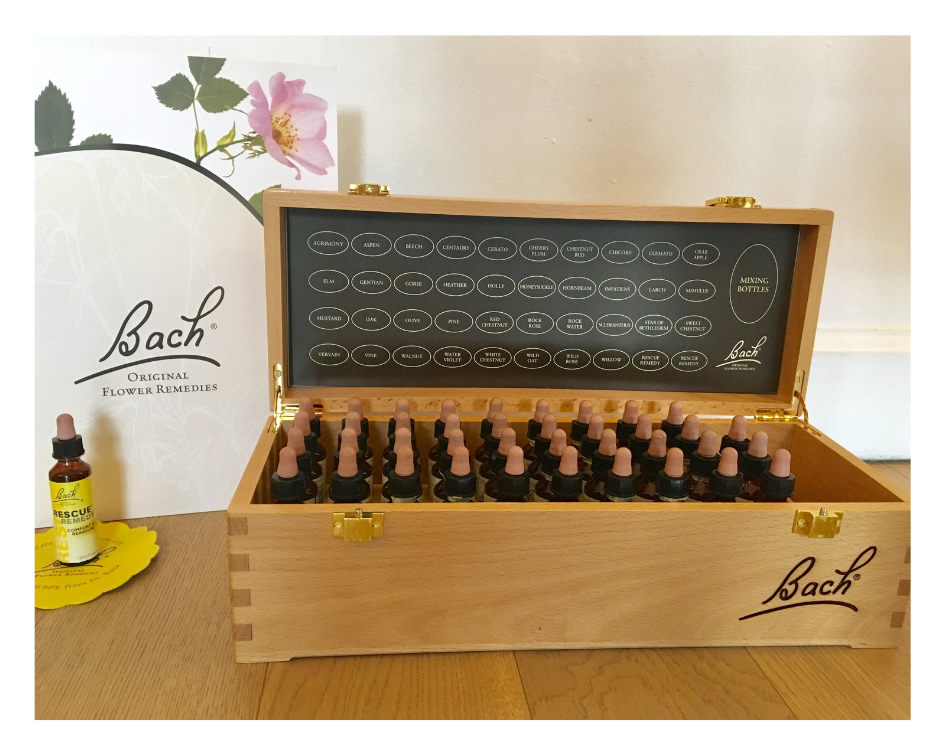
The remedies offer a simple and gentle approach to emotional well-being utilizing 38 flower and plant essences, each targeted to address specific negative emotions that can disrupt our inner balance. By gently restoring balance, Bach Flower Remedies are intendedto help us reclaim our positivity and navigate life’s challenges with greater ease.
For over 80 years, Bach Flower Remedies have been used worldwide with widespread reports of success. Their gentle nature and complete lack of side effects make them a safe choice for everyone, including children, pregnant women, pets, the elderly, and even plants!
While Dr. Edward Bachinitially established himself as a successful British physician, pathologist, and bacteriologist, his experience ultimately led him to question the limitations of traditional, symptom-focused medicine.
Seeking a more comprehensive approach to well-being, Dr. Bach embarked on a journey towards a holistic perspective, one that focused on addressing the root causes of illness beyond just treating their symptoms.
He recognized the profound influence of emotions on overall health, firmly believing that negative emotions and moods could trigger breakdowns leading to illness.
This holistic perspective, prioritizing the emotional well-being of patients, continues to hold significant relevance in today’s healthcare landscape, where the mind-body connection is increasingly recognized, particularly when considering the current landscape of healthcare.
How did I discover the Bach Flower remedies and why did I decide to become a practitioner?
My journey with Bach Flower Remedies began in a rather unexpected way. I was introduced to them on several occasions throughout my life.
I often share that my journey with Bach Flower Remedies transcended a typical discovery — it felt more like the remedies found me.
While not actively seeking alternative approaches at the time, I encountered Bach Flower Remedies during a period in my life marked by a sudden onset of flight-related fear and anxiety. The need to address these challenges became urgent due given that we lived in the USA while both my family and my husband’s family resided in Europe.
Interestingly enough, it was my conventional doctor who initially suggested exploring Bach Flower Rescue Remedy as a potential supportive tool for this situation.
Among the various Bach Flower Remedies, Bach Flower Rescue Remedyis the most famous of the remedies. It is often the only one people are familiar with when they have limited knowledge of Bach Flower Therapy.
However, it’s crucial to note that Rescue Remedy isn’t a single-flower essence. Instead, it’s a carefully chosen blend of five distinct remedies designed to offer support in times of emotional distress, such as during emergencies, trauma, shock, accidents, panic attacks, or even before exams to help manage anxiety.
But the core of Bach Flower Therapy lies in the 38 individual remedies.Unlike blends, each remedy is crafted from a single flower or plant extract, unlocking their specific emotional healing properties. This allows practitioners to create personalized blends, expertly tailoring a selection of remedies to address individual needs and emotional journeys.
Clients and friends often ask me questions like: “Will Bach Flower Remedies eliminate my anxiety or chronic stress?
Or: will they magically transform me into an extrovert if I’m introverted and shy?”
My answer is: No.
Bach Flower remedies, like any approach to emotional well-being, are not a quick fix or a magic solution. Instead, while they cannot entirely erase emotions like anxiety or shyness, they can be valuable tools to help manage emotional states.
Maintaining a balanced state, known as homeostasis, is crucial for overall well-being. This applies not just to our physical health, but also to our mental and emotional state.
Over the years, manycelebrities have embraced the healing power of this gentle system, including Gwyneth Paltrow, Gisele Bündchen, Hugh Grant, Salma Hayek, Emma Watson, and even superstar football player Lionel Messi , who used Bach Flower remedies to combat stress and anxiety before games.
Bach Flower Remedy therapy is not of course the only alternative therapy for managing stress, but it is one of the gentlest and simplest therapies available, which is why I feel comfortable using it as my number one ally for emotional crises and emergencies with my clients, family, friends, children and pets!
I hope this story has served as an introduction to Bach Flower Remedies, offering a potential option for those seeking a holistic and gentle approach to supporting their emotional well-being.
Stress and anxiety got you down? Try a furry friend!
We have many strategies and tools at our disposal to manage stress and anxiety. I have written several articles on this subject, mentioning various tools such as Bach Flower therapy, meditation, walking, and deep breathing. These are all valuable tools, but we often overlook or underestimate the powerful therapeutic effect of pets. Cats, in particular, can have a calming effect on humans. Stroking a cat, can have an immediate calming effect on the nervous system.
In this article, I want to discuss the positive effects of owning a cat. Why a cat and not a dog? Simply because we have learned much more about dogs and their behavior in the past centuries, and how to train them. As a result, we tend to put dogs on a pedestal, leaving out cats and their merits. I believe that contact with cats offers many of the same therapeutic benefits as contact with dogs.
A paper published in ScienceDirect found that cats can have both psychological and physical benefits for their owners. The presence of cats, their purring, and their soft and warm fur can relieve stress and have a calming effect. Stress and anxiety are considered to be contributory factors to cardiovascular disease. Studies have shown that pet owners have significantly lower blood pressure and triglyceride levels than non-pet owners. In other words, owning a cat may help to protect your heart health. Loneliness is likely a precursor for anxiety, depression and low self-esteem. There is some evidence that pet ownership may protect children and youth from loneliness and social isolation, and therefore may help to prevent depression.
Do you remember that day when you were feeling down? You came home and threw yourself on the couch. Who immediately came to the rescue? Your cat! Your cat looked into your eyes, started purring, rubbed against your face to get your scent, and left their scent on you. They even kneaded on your chest or belly before curling up next to you for a cozy nap. Cats can sense our emotions. They know when we are sick, happy, or sad, and they will adjust their behavior accordingly.
While it may be true that it is easier to read a dog’s body language, cats are not as difficult to understand as some people believe. Pay attention to their ears. Flat ears are a sign of fear or aggression, while perked ears are a sign of interest or curiosity. Look at their tail. A high, swishing tail is a sign of excitement or happiness, while a low, tucked tail is a sign of fear or submission. Observe their body posture. A relaxed cat will have a loose, floppy body posture, while a tense cat will have a hunched or arched back.
Many people find it difficult to maintain active focus for an extended period of time when studying. This is especially true for teenagers from the Zoomer or Alpha generations who have grown up with smart technology at their fingertips.
The introduction of smart technology in the past 20 years, which is now ubiquitous in our lives, has drastically changed the way we live and interact with each other. While this has made many aspects of our lives easier, it has also led to the loss of some important things, such as our connection to reality and the present moment.
I have two teenage boys. When I watch them try to do their homework, I can sense their frustration and inability to stay focused for more than 10 minutes at a time, due to the inevitable bombardment of notifications and distractions from their devices. It would be easy to say to keep your phone in another room or turn it off, but they need their devices for homework, staying in touch with classmates, plus all the information they have available on the internet, the Google engine, Google Classroom, and now the AI, can be quite overwhelming.
Although I may sound ancient (I’m not), as a teenager I grew up without computers or cell phones. We only had notebooks and books to study from. Technology is constantly evolving at a rapid pace, reshaping our lives and daily habits.
I don’t usually think about death, but lately, I have been pondering this question. I have witnessed older relatives, who have been a part of my entire life, as well as some distant friends who have passed away due to incurable diseases or accidents. These experiences have led me to reflect on my own mortality and to consider how I want to live my remaining years.
I am not afraid of death, but I am curious about what lies beyond.
One particular story made me think and wonder about death: a not-too-close friend from when I was a teenager suddenly and tragically lost his life while body rafting. He was always a very adventurous person who loved nature and had a special connection with rocks and mountains. He taught me how to rock climb.
While I was of course very saddened by the news of his death, I also found some comfort in knowing that he died doing what he loved most: being outdoors in nature, climbing rocks. He didn’t have to suffer through a long and painful illness, and he died doing something that brought him joy.
He lived a life that was true to himself.
We often delude ourselves into thinking that we are in control of everything and that we have endless time. But the truth is, we are all mortal, and our time on this earth is limited. We spend too much time complaining, taking everything for granted, and wasting precious time. We need to wake up and realize that life is short and that we should make the most of it.
If you want to stay healthy, besides many lifestyle changes you might want to make in your life, the number one change that can have an enormous impact on a physical and mental level is learning how to manage stress. It’s as simple as that.
In an article published in the Malaysian Journal of Medical Sciences, they mention studies that have shown that short-term stress might boost the immune system, while chronic stress has a significant effect on the immune system that ultimately manifests an illness. Interesting fact (also scary): emotional stress is a major contributing factor to the six leading causes of death in the United States: cancer, coronary heart disease, accidental injuries, respiratory disorders, cirrhosis of the liver, and suicide. The relationship between stress and illness is complex. Mainly because the susceptibility to stress varies from person to person.*
The first step to managing stress is to identify what causes you stress. Once you know what your stressors are, you can start to develop strategies for dealing with them.
I was born before the introduction of gender-neutral pronouns, so I understand the confusion that many people feel about them. The pronouns you learned at school were “she/her/hers,” “he/him/his,” and the plural “they/their,” which was used to refer to a group of people. Nowadays, gender-neutral pronouns (also known as neopronouns) are becoming more common. These pronouns are used to identify ourselves and others without specifically using given names, and they do not specify a person’s gender.
We live in a world where many people believe that being kind and grateful is a sign of weakness. They may criticize Millennials, who are often seen as being too sensitive. While I agree that there is a limit to how sensitive we should be, and that we should not be offended by every little thing, being kind and grateful is a different matter.
I believe that kindness and gratitude are two of the most important qualities that a person can have. Being kind is not about being weak or letting people walk all over you. It’s about doing something nice for someone else, without expecting anything in return. It’s about being kind to others and to yourself. A simple gesture such as holding the door open for someone or give someone a compliment.
Anxiety is a very common disorder in modern society. It can affect young and older people and it can be highly distressing.
There are several types of anxieties:
General anxiety,
Social anxiety,
Performance anxiety,
Fear of specific places or situations, which can lead then to panic attacks.
We all know that anxiety, negative thoughts, or emotions can affect our mood, our everyday life, and even our physical health. But what can we do to manage it then?








 Iosè Cocuzza ~ HOLISTIC PATHS TO HEALING