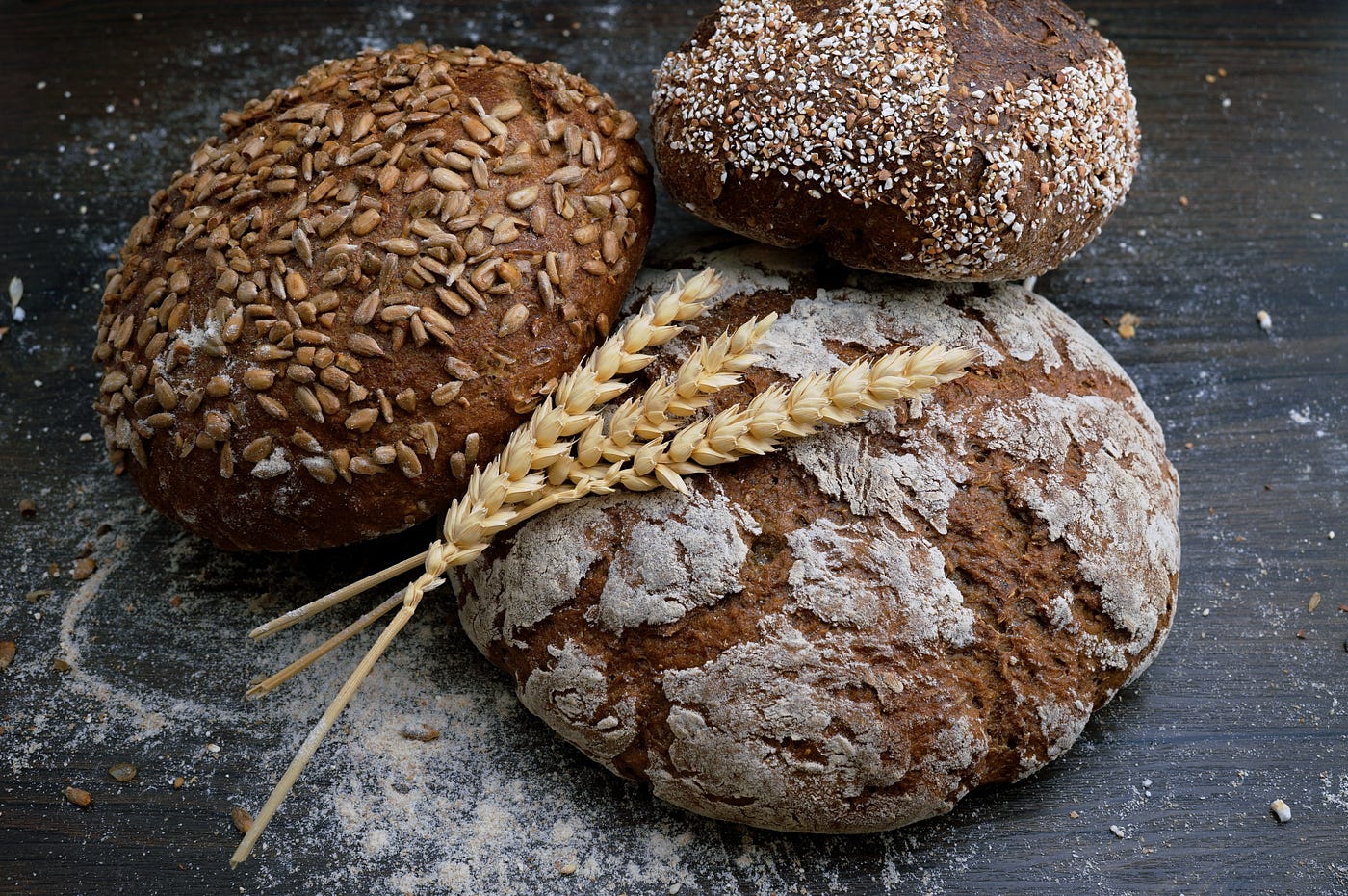
Photo by Wesual Click on Unsplash
Misconceptions and Realities of Celiac Disease
If you’ve been diagnosed with Celiac disease for a while, you may have already noticed the widespread confusion about this condition among the general population unfamiliar with glute-free diets.
It also needs to be observed that an improvement in awareness over the last few years has been achieved.
Whenever I go our for dinner, especially in the past, a familiar scenario unfolds:
Me: “Are there any gluten-free options available on your menu?”
Waiter: “Unfortunately, we don’t have a specific gluten-free menu, but I’ll ensure that our kitchen excludes any milk or cheese from your dish!” (They often lack a gluten-free menu option and occasionally confuse gluten with lactose intolerance.)
Me: “Just to clarify, I’m fine with dairy; it’s gluten that I need to avoid.” The waiter’s expression hints at uncertainty about gluten. I then specify: “grains…wheat. I have Celiac disease”.
Waiter : ” Oh, got it. I’m sorry about that. I’ll make sure the kitchen knows about your allergy”.
I’m tempted to respond once more, saying ” Thanks, by the way, Celiac disease is not an allergy…”
However, I decided against it. It would be time-consuming to educate every waiter each time I go out.
For me, it’s satisfactory that they perceive it as an allergy, even if it’s not accurate, Sometimes, it works to my advantage. At least they will take extra precautions to prevent cross-contact in order to safeguard against a potential severe ‘allergic’ reaction.
The reality is that not many people are familiar with Celiac disease, and I, too, had limited knowledge when I first learned about my condition. The initial realization meant giving up some of my favorite foods like bread, pizza, and pasta. That much was clear. However, I soon discovered that there’s much more to Celiac disease than just dietary restrictions.
Let’s begin with some basic information.
Gluten consists of two types of proteins, namely gliding, and glutenin, which are found in wheat, barley, and rye.
Celiac disease is an autoimmune disease (not an allergy), that might manifest in individuals with a genetic predisposition, meaning that every time gluten is ingested, even a small amount, the immune system mistakenly sees the gluten as a foreign invader and reacts by attacking the small intestine, impeding the absorption of nutrients from food and leading to malabsorption syndrome.
Understanding the fundamental distinction between an allergy and an autoimmune disease is crucial. In the case of an allergy . depending on its severity , it could lead to anaphylactic shock, which is life-threatening and may prove fatal without prompt intervention.
However, with Celiac disease, being an autoimmune condition, such a scenario is impossible unless there is an additional wheat allergy alongside Celiac disease.
People with Celiac disease do not get anaphylaxis when they eat gluten.
Common symptoms for individuals with Celiac disease following gluten ingestion can include:
- Nausea
- Vomiting
- Gas/bloating
- Cramps
- Abdominal pain
- Diarrhea
- Constipation
- Tiredness
While common symptoms of a food allergy can include:
- Feeling dizzy or lightheaded.
- Itchy skin or a raised rash (hives)
- Swelling of the lips, face and eyes
- Coughing, wheezing, breathlessness
- Sneezing or an itchy, runny or blocked nose
- Feeling sick or being sick
- Stomach cramps
Anaphylaxis ( this is a severe allergic reaction- although the condition is life threatening, deaths are rare )
Allergies are triggered by a different type of antibody known as IgE(immunoglobulin E antibodies).
As of now, the only known therapy to manage Celiac disease is to follow a strict, lifelong gluten-free diet.
I hope this helps clarify the distinction between autoimmune diseases and allergies, specifically highlighting the difference between a food allergy and Celiac disease.
Originally published on Medium – © 2024 Iose Cocuzza. All rights reserved.
Medical Disclaimer: I am not a medical doctor. The information presented in this article is not intended to offer medical advice but is provided for informational purposes only. It should not be seen as a replacement for professional medical advice or consultation with healthcare professionals.
Subscribe to her email list today to receive notifications each time she publishes a new article on Medium by clicking here.
For more information on maintaining a healthy body and mind, visit www.iosecocuzza.com 🌿💕
References:
 Iosè Cocuzza ~ HOLISTIC PATHS TO HEALING